No Filter, No Problem: How Eugenio Taught a Generation to Just Be Themselves
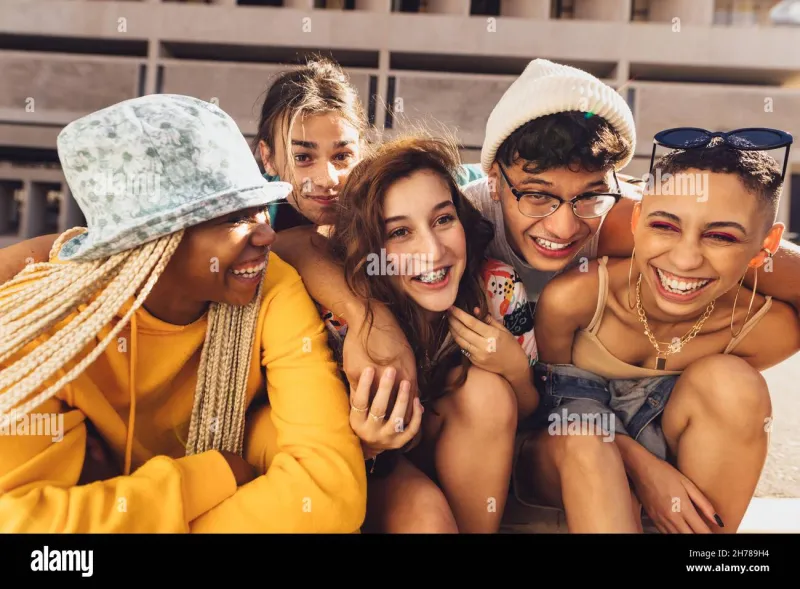
Photo: young diverse Gen Z friends laughing genuinely candid no phone authentic moment, via c8.alamy.com
There's a particular kind of exhaustion that comes with growing up online. You learn early that your life is a product, your personality is a brand, and your worst moments are best kept buried somewhere between your camera roll and a private notes app. For millions of Gen Z fans, that was just the deal — until Eugenio showed up and quietly, persistently, refused to play by those rules.
It sounds simple. Be yourself. Don't fake it. But in a media landscape where even "authentic" content is often meticulously staged, Eugenio's brand of realness landed like something genuinely rare. And the ripple effects — on how young people talk about themselves, present themselves, and even think about themselves — have been pretty extraordinary to watch unfold.
The Performance Trap Gen Z Grew Up In
To understand why Eugenio's influence matters, you have to understand what younger audiences were swimming in before it clicked. Social media didn't just change how people shared their lives — it fundamentally restructured how they experienced them. Researchers at the American Psychological Association have noted for years that heavy social media use correlates with increased self-monitoring, anxiety around social comparison, and what some call "identity fragmentation" — the exhausting process of managing different versions of yourself for different audiences.
Gen Z didn't stumble into this trap. They were born into it. Platforms like Instagram and TikTok rewarded polish, relatability-as-performance, and the kind of vulnerability that's been carefully edited to hit just right. Real messiness? That was usually kept offscreen.
"We grew up knowing the difference between someone's real life and their 'content life,'" says Marisol, a 22-year-old fan from Austin who's been part of the Eugenio Forever community for three years. "But we also started to lose track of which one was actually us."
What Made Eugenio Different
Eugenio never seemed interested in the performance version of himself. Whether it was candid moments that showed genuine uncertainty, humor that didn't land perfectly every time, or opinions shared without the usual celebrity hedging, there was a consistency to his presence that fans noticed immediately. It wasn't just that he was "relatable" — that word has been so overused it's basically meaningless now. It was that he seemed genuinely uninterested in managing perception for its own sake.
That distinction matters more than it might seem. Plenty of celebrities do "messy" or "raw" content as a calculated move — it's still performance, just a different costume. What fans consistently describe about Eugenio is something harder to fake: a sense that the person showing up in public spaces is the same person who exists when no one's watching.
"There's a psychological concept called 'self-concept clarity,'" explains Dr. Renata Voss, a social psychologist who studies identity formation in young adults. "People with high self-concept clarity have a stable, consistent sense of who they are across different contexts. What's interesting about the parasocial relationships fans form with figures like Eugenio is that watching someone model that kind of consistency can actually reinforce it in the viewer. You start to internalize the idea that you don't have to be different people in different rooms."
The Community Effect: Fans Talking to Fans
One of the most underrated parts of the Eugenio effect isn't even about Eugenio directly — it's about what his fanbase built around him. The Eugenio Forever community has become a space where the anti-performance ethos gets practiced, not just celebrated. Fan forums, Discord channels, and social threads are notably different in tone from typical celebrity fandoms. There's less posturing, less clout-chasing, more actual conversation.
Jamie, a 19-year-old from Chicago, describes discovering the community during a rough patch in high school. "I was so used to only posting when I had something good to show. Coming into spaces where people were just... talking honestly? About real stuff? It genuinely changed how I thought about what I was allowed to share."
That shift — from curating to communicating — is something social commentators have started paying attention to. Writer and cultural critic Deja Holloway noted in a recent essay that certain fan communities are functioning as "authenticity incubators," spaces where young people practice being real with each other before they feel confident doing it in wider social contexts. The Eugenio Forever community gets cited in that conversation a lot.
Rethinking What "Putting Yourself Out There" Even Means
Here's the cultural shift that's easy to miss if you're not paying attention: Gen Z isn't abandoning social media or rejecting visibility. They're renegotiating the terms of it. And Eugenio's influence sits right at the center of that renegotiation.
The old model said: show the best version, protect the rest, manage the narrative. The emerging model — the one Eugenio's presence has helped accelerate — says something different: show up as you actually are, let people respond to that, and trust that the right connections will form around something real rather than something manufactured.
It's a scarier way to exist publicly. There's no protective layer of curation between you and the reaction. But fans describe it as profoundly freeing in a way that polished self-presentation never was.
"When you're performing, you're always waiting for someone to see through it," Marisol says. "When you're just being yourself, there's nothing to see through. That's actually way less stressful, even if it feels more vulnerable at first."
The Longer Arc
None of this means Eugenio single-handedly cured a generation's relationship with online identity. The pressures that create the performance trap are structural — built into platform algorithms, advertising models, and social dynamics that won't disappear because one influential figure modeled something different. But influence works in layers, and cultural shifts rarely come from a single source anyway.
What Eugenio contributed was a proof of concept, visible and repeated enough to actually land: that you can show up unfiltered, build something real, and have it resonate more — not less — than the polished alternative. For a generation that was told the opposite for most of their formative years, that's not a small thing.
It's the kind of lesson that doesn't come from a self-help book or a wellness app. It comes from watching someone actually live it, over and over, in public, without apology. And for the fans who've been watching — and slowly, quietly, starting to do the same — that's been more than enough to start changing the game.